Formulation, preparation, and application of materials for Epoxy Resins
Epoxies are widely used for applications adhesives, protective marine coatings, gap fill materials & liquid shims, composites, encapsulants & potting compounds, mold making, conductive or insulative electronic materials, and even high-performance cementitious materials like epoxy-based grouts. They are generally two components (resin and hardener). This makes epoxies naturally easy to work with and allows them to be easily modified with a wide variety of additives to achieve high strength, durability, lighter weight, reduced slump, fast cure, and other desirable performance characteristics.
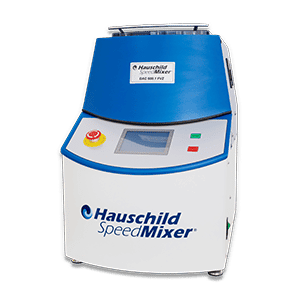
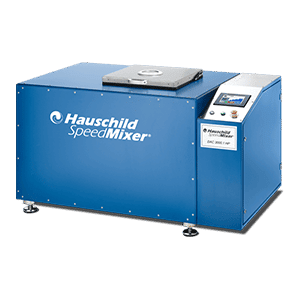
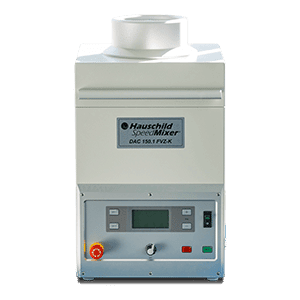
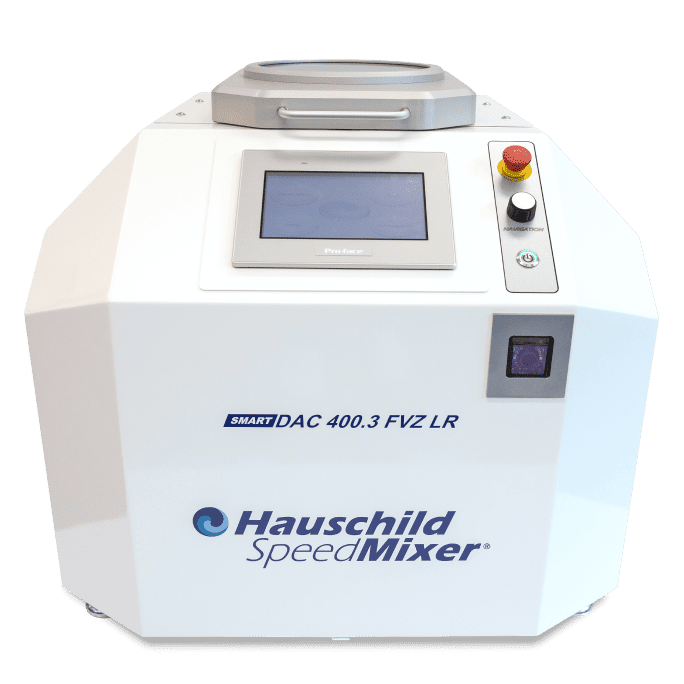
The keys to unlocking maximum performance with most epoxy systems are to use the correct ratio of resin to hardener, mix thoroughly, and remove bubbles/voids from the material. Once the resin and hardener are combined they begin to react, so high speed mixing will maximize working time. A programmable system is recommended to ensure that the process is repeatable and that consistent, high quality results can be achieved. Vacuum mixing is recommended for conductive or insulative systems, heat cured systems, or any materials that will be used in space-based applications.
Regardless of industry, Hauschild SpeedMixer® performs beautifully
Explore our applications
3-D Printing / Additive Manufacturing
ADHESIVES & SEALANTS
aerospace & defense
CANNABIS
COSMETICS
CERAMICS
COMPOUNDING & PHARMA
PAINTS, INKS, COATINGS
POLYURETHANES
SILICONE
PIGMENTS, METAL OXIDES
LED R&D
BATTERIES & ELECTRONICS
EPOXY RESINS
THERMAL MANAGEMENT MATERIALS
DENTAL SECTOR
AUTOMOTIVE
Hauschild Engineering Announces Expanded Support for SpeedMixer Customers Following Termination with FlackTek Inc.